FEATURED CATEGORIES
FEATURED BRANDS
FEATURED APPLICATION
August 30, 2016
What Size Air Compressor Do I Need For My Tool?
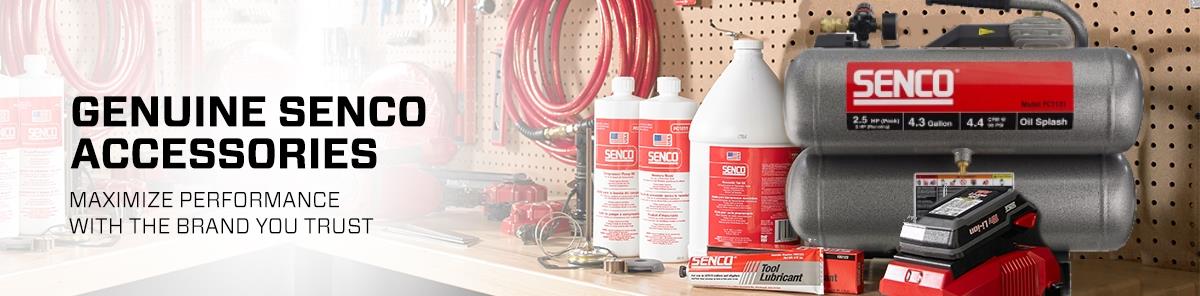 Each tool takes a “breath” of compressed air, which then provides the driving force necessary to sink each fastener. The larger the pneumatic tool, the more air it requires to operate, which is also known as “air consumption per cycle”.
PRO TIP: If you divide the air consumption per cycle into the CFM of any given air compressor, you will determine the possible drives per minute. This simple calculation should tell you if the compressor is able to properly power the tool you are intending to use.
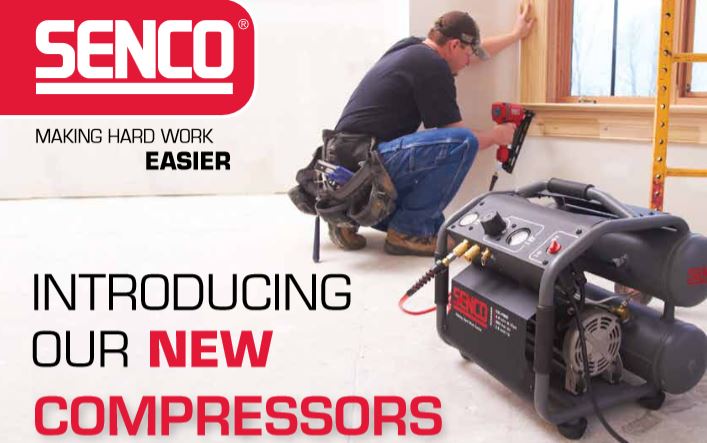 All that's left to do is determine how quickly you're planning to run the tool. A professional construction contractor may need the extra juice to operate one - or more - large tools at a high rate of speed. In this instance, a wheelbarrow compressor (either gasoline wheeled or electric wheeled compressor depending on preferred power source) will provide the necessary power required. If similar output is required, but the application is in a fixed location (think assembly line), a large stationary compressor may also work.
For those running one or two smaller air tools, a portable electric compressor should provide more than enough energy - especially if used with an additional expansion (holding) tank of air. If you are running several small to medium-size air tools, you'll want a compressor rated for 4.0+ CFM. If you're looking to run a finish and trim tool (or similar) individually, a 2.0+ CFM compressor should provide ample power.
For easy reference, we've included this handy chart below, provided by Senco.
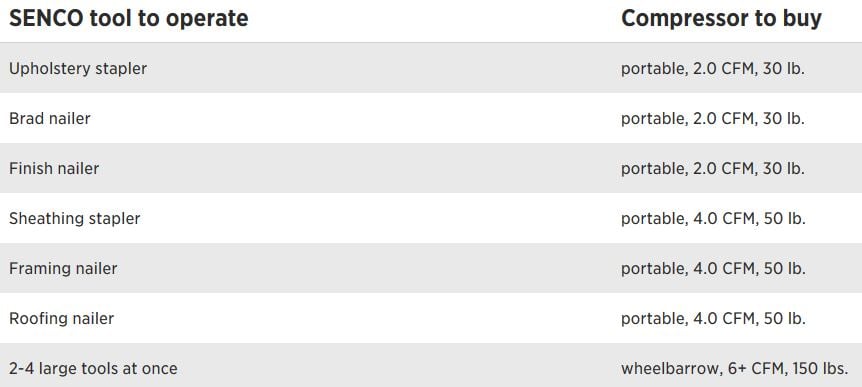 Which compressor will best suit your project?
~The Nail Gun Depot Team
Join Our Mailing List
Sign Up For Nail Gun Depot supply news, savings and access to exclusive deals. Subscribe Today!
Phone: 1.888.720.7892
Email:sales@nailgundepot.com
Monday - Friday
8:00 AM - 4:30PM EST
All trademarks and brands are property of their respective owners
Privacy Policy | AI View