FEATURED CATEGORIES
FEATURED BRANDS
FEATURED APPLICATION
August 22, 2018
Easy Tips To Install Shiplap
What Is Shiplap?
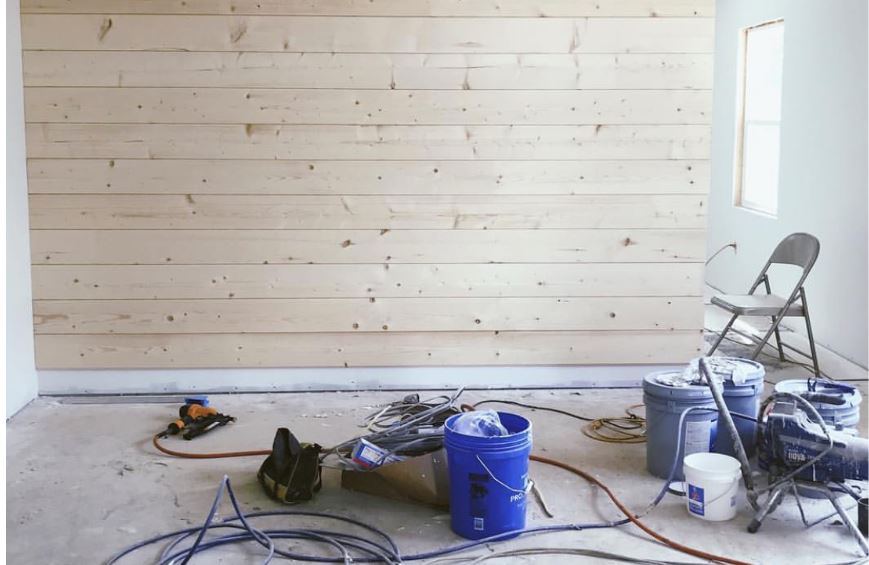
The term “shiplap” most likely gets its name from the manner in which ship hulls were once built, with planks overlapping one another to form a watertight joint. Shiplap is a type of wood siding with a rabbet joint (or rectangular tongue) on either side of the board. Placed one after another, the rabbets of the boards overlap, creating a snug connection and insulator that keeps out water and weather. Shiplap can be found on the exterior of homes, old sheds and outbuildings (even floors), but has recently gained notoriety as a popular interior design element for accent walls - and even ceilings.
Not only is shiplap functional, but it adds nice texture and dimension. The result is a series of horizontal seams that add interest to an otherwise flat, faceless surface.
Ready to get started installing shiplap?
What You’ll Need:
Safety Glasses: A given for any project using power tools, always have a pair of safety glasses on hand.Stud Finder: Attaching the boards securely requires knowing where your studs are located. Identify stud placement before making your first cut.
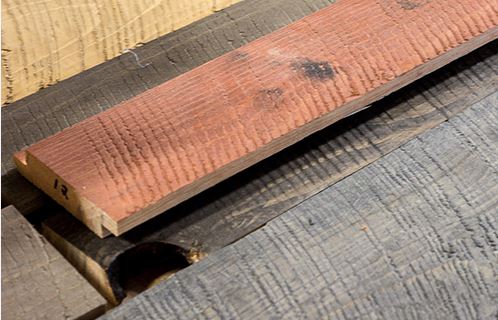
Wood Boards: Choose pine, cedar or even plywood for your shiplap wood. You don’t need new boards, as the look of rough, unfinished or reclaimed wood merely adds to its character and texture (some people intentionally weather the wood to give it a rustic appearance). Either way, for a traditional look, you’ll want 8’ long boards, between 5” and 8” wide. If starting from scratch, plan to have a power saw on hand for accurate, easy cuts.
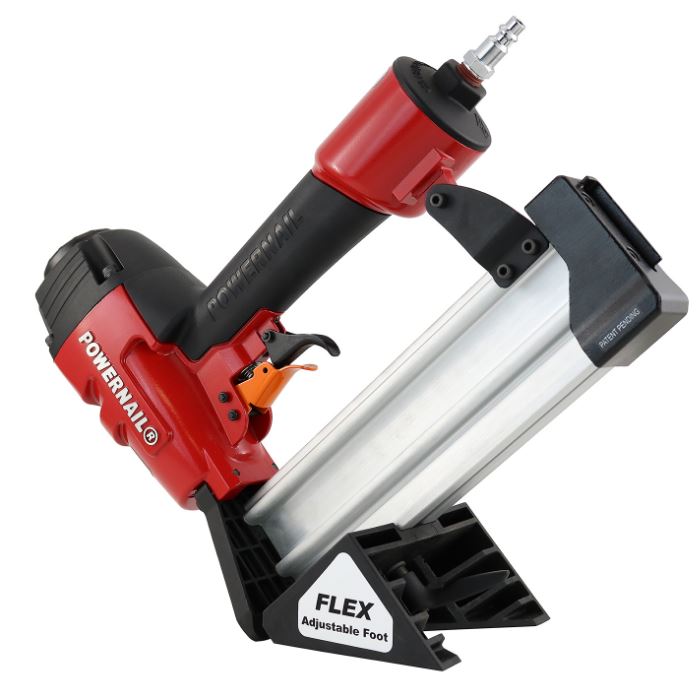
 Nail Gun: There are a few options when it comes to how you're attaching the shiplap to your sub-surface. Some installers prefer to use a lightweight flooring nailer, such as the Powernail 50F, which drives 18-gauge cleat nails. This flooring nailer installs engineered and natural wood planks from 3/8” to 3/4," but is particularly unique thanks to its easily adjustable FLEX Foot, which accommodates different board thicknesses - without the need for adjustment tools. If using a flooring nailer to install shiplap, you'll also want to make sure the tool is lightweight (since gravity will be pulling it in the opposite direction), and is capable of running a wide range of fastener lengths (to accommodate varying board thickness).
 It's also not uncommon for shiplap installers to use either a finish nail gun or a framing nailer. If using pre-manufactured shiplap, consult the board manufacturer for fastener specific requirements.
Nails: The type of nail you use ultimately depends on the nail gun you're using. If using a tool, such as the Powernail 50F, you'll need to use the respective flooring cleats that fit the tool. If using a 16 gauge finish nailer, the same applies.
For a room or area that sees a lot of moisture, like a bath (or if you intend to face nail the boards), consider using corrosion-resistant stainless steel nails.
Air Compressor: If you're using an air-powered nailer, make sure you have a compressor capable of completing the job. Take a look at the CFM (air volume delivery) requirements for your tool of choice, and ensure the air compressor is able to withstand the pressure.
It's also not uncommon for shiplap installers to use either a finish nail gun or a framing nailer. If using pre-manufactured shiplap, consult the board manufacturer for fastener specific requirements.
Nails: The type of nail you use ultimately depends on the nail gun you're using. If using a tool, such as the Powernail 50F, you'll need to use the respective flooring cleats that fit the tool. If using a 16 gauge finish nailer, the same applies.
For a room or area that sees a lot of moisture, like a bath (or if you intend to face nail the boards), consider using corrosion-resistant stainless steel nails.
Air Compressor: If you're using an air-powered nailer, make sure you have a compressor capable of completing the job. Take a look at the CFM (air volume delivery) requirements for your tool of choice, and ensure the air compressor is able to withstand the pressure.
Pro Tips:
- If you plan to paint/sand the shiplap, do so before nailing the boards in place.
- Using a stud finder, locate the studs and mark them on the wall. With the assistance of a level to keep things even, apply the first board starting at the bottom and work upward.
- The spacing between boards is traditionally 1/8”. To make sure boards are evenly spaced, place a nickel or quarter between the boards as a spacer.
- Some people like the look of visible nail heads on shiplap. To avoid visible nail holes, nail boards through the rabbet or tongue.
- Don’t feel that you have to apply shiplap to an entire wall. You can always select an area to accent, such as a pantry, or highlight a feature, like a fireplace.
 Shiplap installation can vary in complexity, depending on the surface it is being adhered to, the angle it is being installed, and other factors such as material composition. Always refer to your board manufacturer for specific instructions on how to install their product properly.
Shop Nail Guns at Nail Gun Depot Flooring Nailers Framing Nailers Finish Nailers
Join Our Mailing List
Sign Up For Nail Gun Depot supply news, savings and access to exclusive deals. Subscribe Today!
Phone: 1.888.720.7892
Email:sales@nailgundepot.com
Monday - Friday
8:00 AM - 4:30PM EST
All trademarks and brands are property of their respective owners
Privacy Policy | AI View